
History of crêpes
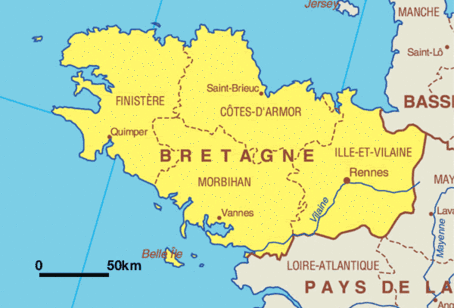
Almost every country has its own version of the crêpe, but it was in Brittany (fr. Bretagne) the northwest region of France where the tools and techniques were created and perfected, elevating the crêpe to an art form.
The word crêpe is French for pancake and is derived from the Latin crispa meaning “curled”. Crêpes were originally called galettes, meaning
flat cakes.
Around the 12th century buckwheat was introduced in Brittany from the east. Buckwheat thrived on the desolate and rocky Breton moors and is called “sarrasin” or “blé noir” (black wheat) due to the dark specs that are often found in it. Buckwheat belongs to the polygonaceae family, which also includes rhubarb and sorrel. It is high in fiber and is an excellent plant source of easily digestive protein and contains all eight essential amino acids. Another benefit is that it is gluten free.
White flour crêpes appeared only at the turn of the 20th century when white wheat flour which formerly had been as expensive as honey, sugar or meat, became affordable. White flour crêpes are as thin as buckwheat crêpes but softer as a result of the eggs, milk, and butter used to make them.
Crêpe making has evolved from being cooked on large cast-iron hot plates heated over a wood fire in a fireplace (le "galet") to hot plates that are now gas or electric heated with thermostatic control. The batter is spread with a tool known as a rozel and flipped with a spatula. In Brittany, crêpes and galettes are traditionally served with cider.
On February 2 crêpes are offered in France on the day known as Fête de la Chandeleur. Not only do the French eat a lot of crêpes on this day, but they also do a bit of fortune telling while making them, flipping the crêpe, while holding a coin in the left hand, is said to ensure wealth & happiness for the year.
Crêpes are popular not only throughout France but elsewhere in Europe where the pancakes go by other names and adaptations, including Italian crespelle, Hungarian palacsintas, Jewish blintzes, Scandinavian plattars, Russian blini, and Greek kreps.
Savored for centuries, crêpes are celebrating a worldwide revival today and for good reason. Come, let us introduce you to our hand-crafted sweet and savory delights!